
Implementing Instructions:
Supervisors
Personnel Office
Employees
Frequently Asked Questions Professional Development Program

Director's Message
Memorandum
To: Directorate, Field Directorate, WASO Office and Division Chiefs, and Park Superintendents
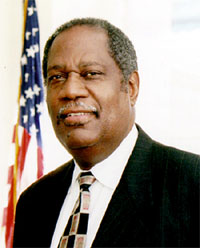
From: Director
Subject: Implementation of Resources Careers
I am proud to announce the immediate implementation of the Resources Careers program. Resources Careers is a cornerstone of the National Park Service's Natural Resource Challenge and our commitment to stewardship of the cultural and natural resources within our care as well as the human resources that comprise our workforce. The Resources Careers initiative, begun in 1994 by the Careers Council of the Vail Agenda, has the purpose of defining and implementing a human resources development program for resources management careers that will meet the stewardship needs of the National Park Service.
With this memorandum, I endorse the establishment of a career ladder of GS-5/7/9/11 for 24 professional cultural or natural resources management benchmark positions that include 5 interdisciplinary positions. This professional career ladder will be the norm for resources management positions throughout the Service. In addition, benchmark positions were developed for 9 technician series at the GS-5, GS-6, and GS-7 grade levels; however, service-wide career ladders were not established for these positions. Professional GS-12 resources management position descriptions are also provided for optional use and must be classified locally by the servicing personnel office.
The Resources Careers program is comprised of several components that include position descriptions, evaluation statements, position management guidance and implementation instructions, and the professional development program guide. The components of the Resources Careers program have been developed by park managers, professional resources managers in cultural and natural disciplines, and human resources professionals. All components have undergone thorough field review and testing.
The dissemination of these materials is made available on the NPS Intranet (www1.nrintra.nps.gov/careers/). Each park and central office will also receive the Resources Careers Manual, a notebook in which to store Resources Careers materials downloaded from the web or copied from the CD-ROM that will be included with the manual.
To ensure the effective implementation of the Resources Careers program, all NPS units and offices must conduct a review of the positions and organizational relationships of all employees at or below the GS-11 grade level who are assigned substantial resources management responsibilities. Reviews and implementation must be completed by May 2000.
To assist parks with the implementation, each Regional Director and the Associate Directors for Natural Resource Stewardship and Science and Cultural Resource Stewardship and Partnerships should designate at least one person to be a collateral Resources Careers contact person. Regions should consider a human resources person as the primary contact augmented by one or more experienced cultural and/or natural resources program managers. Names and telephone numbers of these individuals should be provided to Kim Lewis, Personnel Management Specialist, WASO by email Kim_Lewis@nps.gov or telephone (202) 208-7891. Contacts should be submitted no later than January 31, 2000. Ms. Lewis will serve as the lead Washington Office Human Resources contact on the implementation of Resources Careers.
The foundation for effective natural and cultural resource stewardship in the National Park Service is a fully professional staff of trained resource managers and other NPS employees. Leadership must have unimpeded access to advice from resource professionals. We must also ensure that natural and cultural resources staffs have opportunities to advance and achieve upper level management positions. The full implementation of Resources Careers is a critical step toward that end.
I look forward to hearing a report on the implementation progress from each Regional Director at a National Leadership Council meeting in early 2000. Thank you for your support.
/s/ Bob Stanton, December 17, 1999