

|
ARTILLERY THROUGH THE AGES A Short Illustrated History of Cannon, Emphasizing Types Used in America |
 |
THE CHARACTERISTICS OF CANNON (continued)
HOWITZERS
The howitzer was invented by the Dutch in the seventeenth century to throw larger projectiles (usually bombs) than could the field pieces, in a high trajectory similar to the mortar, but from a lighter and more mobile weapon. The wide-purpose efficiency of the howitzer was appreciated al most at once, and it was soon adopted by all European armies. The weapon owed its mobility to a rugged, two-wheeled carriage like a field carriage, but with a relatively short trail that permitted the wide arc of elevation needed for this weapon.
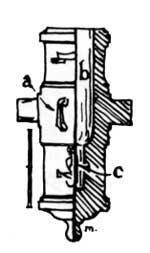
FIGURE 34—SPANISH 6-INCH HOWITZER (1759-88).
This bronze piece was founded during the reign of Charles III and bears
his shield, a—Dolphin, or handle, b—Bore, c—Powder chamber.
British howitzers of the 1750's were of three calibers: 5.8-, 8-, and 10-inch, but the 10-incher was so heavy (some 50 inches long and over 3,500 pounds) that it was quickly discarded. Müller deplored the superfluous weight of these pieces and developed 6-, 8-, 10-, and 13-inch howitzers in which, by a more calculated distribution of the metal, he achieved much lighter weapons. Müller's howitzers survived in the early 6- to 10-inch pieces of United States artillery and one fine little 24-pounder of the late eighteenth century happens to be among the armament of Castillo de San Marcos, along with some early nineteenth century howitzers. The British, incidentally, were the first to bring this type gun to Florida. None appeared on the Castillo inventory until the 1760's.
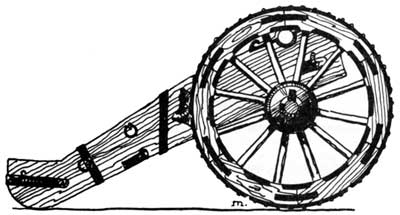
FIGURE 35—ENGLISH 8-INCH "HOWITZ" CARRIAGE
(1756). The short trail enabled greater latitude in elevating the
howitzer.
In addition to the very light and therefore easily portable mountain howitzer used for Indian warfare, United States artillery of 1850 included 12-, 24-, and 32-pounder field, 24-pounder and 8-inch siege and garrison, and the 10-inch seacoast howitzer. The Navy had a 1 2-pounder heavy and a 24-pounder, to which were added the 12- and 24-pounder Dahlgren rifled boat howitzers of the Civil War period. Such guns were often used in landing operations. The following table gives some typical ranges:
| Caliber | Elevation | Range in yards |
| 10-inch seacoast | 5° | 1,650 |
| 8-inch siege | 12° 30" | 2,280 |
| 24-pounder naval | 5° | 1,270 |
| 12-pounder heavy naval | 5° | 1,085 |
| 20-pounder Dahlgren rifled | 5° | 1,960 |
| 12-pounder Dahlgren rifled | 5° | 1,770 |

|

|
|
|
Last Modified: Thurs, Sep 11 2003 10:00:00 pm PST |