

|
ARTILLERY THROUGH THE AGES A Short Illustrated History of Cannon, Emphasizing Types Used in America |
 |
THE CHARACTERISTICS OF CANNON (continued)
MORTARS
From earliest times the usefulness of the mortar as an arm of the artillery has been clearly recognized. Up until the 1800's the weapon was usually made of bronze, and many mortars had a fixed elevation of 45°, which in the sixteenth century was thought to be the proper elevation for maximum range of any cannon. In the 1750's Müller complained of the stupidity of British artillerists in continuing to use fixed-elevation mortars, and the Spanish made a mortero de plancha, or "plate" mortar (fig. 37), as late as 1788. Range for such a fixed-elevation weapon was varied by using more or less powder, as the case required. But the most useful mortar, of course, had trunnions and adjustable elevation by means of quoins.
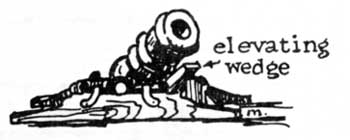
FIGURE 36—BRITISH MORTAR ON ELEVATING BED
(1740).
The mortar was mounted on a "bed"—a pair of wooden cheeks held together by transoms. Since a bed had no wheels, the piece was transported on a mortar wagon or sling cart. In the battery, the mortar was generally bedded upon a level wooden platform; aboard ship, it was a revolving platform, so that the piece could be quickly aimed right or left. The mortar's weight, plus the high angle of elevation, kept it pretty well in place when it was fired, although British artillerists took the additional precaution of lashing it down.
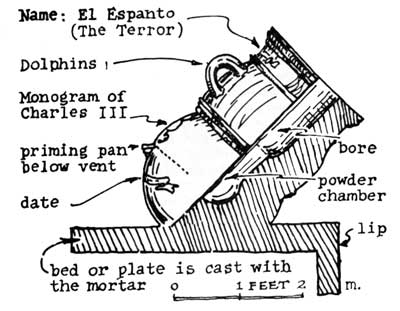
FIGURE 37—SPANISH 5-INCH BRONZE MORTAR (1788).
The mortar did not use a wad, because a wad prevented the fuze of the shell from igniting. To the layman, it may seem strange that the shell was never loaded with the fuze toward the powder charge of the gun. But the fuze was always toward the muzzle and away from the blast, a practice which dated from the early days when mortars were discharged by "double firing": the gunner lit the fuze of the shell with one hand and the priming of the mortar with the other. Not until the late 1600's did the method of letting the powder blast ignite the fuze become general. It was a change that greatly simplified the use of the arm and, no doubt, caused the mortarman to heave a sigh of relief.
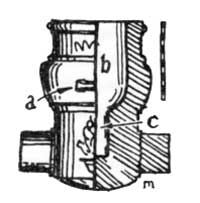
FIGURE 38—SPANISH 10-INCH BRONZE MORTAR
(1759-88). a—Dolphin, or handle, b—Bore, c—Powder chamber.
Most mortars were equipped with dolphins, either singly or in pairs, which were used for lifting the weapon onto its bed. Often there was a little bracketed cup—a priming pan—under the vent, a handy gadget that saved spilling a lot of powder at the almost vertical breech. As with other bronze cannon, mortars were embellished with shields, scrolls, names, and other decoration.
About 1750, the French mortar had a bore length 1-1/2 diameters of the shell; in England, the bore was 2 diameters for the smaller calibers and 3 for the 10- and 13-inchers. The extra length added a great deal of weight to the British mortars: the 13-inch weighed 25 hundredweight, while the French equivalent weighed only about half that much. Müller complained that mortar designers slavishly copied what they saw in other guns. For instance, he said, the reinforce was unnecessary; it . . . overloads the Mortar with a heap of useless metal, and that in a place where the least strength is required, yet as if this unnecessary metal was not sufficient, they add a great projection at the mouth, which serves to no other purpose than to make the Mortar top-heavy. The mouldings are likewise jumbled together, without any taste or method, tho' they are taken from architecture." Field mortars in use during Müller's time included 4.6-, 5.8-, 8-, 10-, and 13-inch "land" mortars and 10- and 13-inch "sea" mortars. Muller, of course, redesigned them.
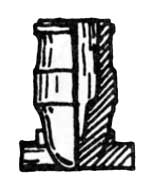
FIGURE 39—COEHORN MORTAR. The British General
Oglethorpe used 20 coehorns in his 1740 bombardment of St. Augustine.
These small mortars were also used extensively during the Civil War.
The small mortars called coehorns (fig. 39) were invented by the famed Dutch military engineer, Baron van Menno Coehoorn, and used by him in 1673 to the great discomfit of French garrisons. James Oglethorpe had many of them in his 1740 bombardment of St. Augustine when the Spanish, trying to translate coehorn into their own tongue, called them cuernos de vaca—"cow horns." They continued in use through the U.S. Civil War, and some of them may still be seen in the battlefield parks today.
Bombs and carcasses were usual for mortar firing, but stone projectiles remained in use as late as 1800 for the pedrero class (fig. 43). Mortar projectiles were quite formidable; even in the sixteenth century missiles weighing 100 or more pounds were not uncommon, and the 13-inch mortar of 1860 fired a 200-pound shell. The larger projectiles had to be whipped up to the muzzle with block and tackle.
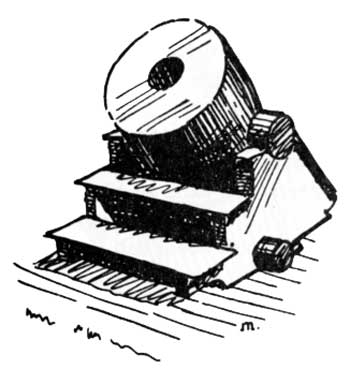
FIGURE 40—THE "DICTATOR." This huge 13-inch
mortar was used by the Federal artillery in the bombardment of
Petersburg, Va., 1864-65.
In the last century, the bronze mortars metamorphosed into the great cast-iron mortars, such as "The Dictator," that mammoth Federal piece used against Petersburg, Va. Wrought-iron beds with a pair of rollers were built for them. In spite of their high trajectory, mortars could range well over a mile, as witness these figures for United States mortars of the 1860's, firing at 45° elevation:
| Caliber | Projectile weight (pounds) |
Range (yards) |
| 8-inch siege | 45 | 1,837 |
| 10-inch siege | 90 | 4,625 |
| 12-inch seacoast | 200 | 2,100 |
| 13-inch seacoast | 200 | 4,325 |
At the siege of Fort Pulaski in 1862, however, General Gillmore complained that the mortars were highly inaccurate at mile-long range. On this point, John Müller would have nodded his head emphatically. A hundred years before Gillmore's complaint, Müller had argued that a range of something less than 1,500 yards was ample for mortars or, for that matter, all guns. "When the ranges are greater," said Müller, "they are so uncertain, and it is so difficult to judge how far the shell falls short, or exceeds the distance of the object, that it serves to no other purpose than to throw away the Powder and shell, without being able to do any execution."

|

|
|
|
Last Modified: Thurs, Sep 11 2003 10:00:00 pm PST |