

|
ARTILLERY THROUGH THE AGES A Short Illustrated History of Cannon, Emphasizing Types Used in America |
 |
THE ERA OF ARTILLERY (continued)
SIXTEENTH CENTURY CANNON
After 1470 the art of casting greatly improved in Europe. Lighter cannon began to replace the bombards. Throughout the 1500's improvement was mainly toward lightening the enormous weights of guns and projectiles, as well as finding better ways to move the artillery. Thus, by 1556 Emperor Ferdinand I was able to march against the Turks with 57 heavy and 127 light pieces of ordnance.
At the beginning of the 1400's cast-iron balls had made an appearance. The greater efficiency of the iron ball, together with an improvement in gunpowder, further encouraged the building of smaller and stronger guns. Before 1500 the siege gun had been the predominant piece. Now forged-iron cannon for field, garrison, and naval service—and later, cast-iron pieces—were steadily developed along with cast-bronze guns, some of which were beautifully ornamented with Renaissance workmanship. The casting of trunnions on the gun made elevation and transportation easier, and the cumbrous beds of the early days gave way to crude artillery carriages with trails and wheels. The French invented the limber and about 1550 took a sizable forward step by standardizing the calibers of their artillery.
Meanwhile, the first cannon had come to the New World with Columbus. As the Pinta's lookout sighted land on the early morn of October 12, 1492, the firing of a lombard carried the news over the moonlit waters to the flagship Santa Maria. Within the next century, not only the galleons, but numerous fortifications on the Spanish Main were armed with guns, thundering at the freebooters who disputed Spain's ownership of American treasure. Sometimes the adventurers seized cannon as prizes, as did Sir Francis Drake in 1586 when he made off with 14 bronze guns from St. Augustine's little wooden fort of San Juan de Pinos. Drake's loot no doubt included the ordnance of a 1578 list, which gives a fair idea of the armament for an important frontier fortification: three reinforced cannon, three demiculverins, two sakers (one broken), a demisaker and a falcon, all properly mounted on elevated platforms in the fort to cover every approach. Most of them were highly ornamented pieces founded between 1546 and 1555. The reinforced cannon, for instance, which seem to have been cast from the same mold, each bore the figure of a savage hefting a club in one hand and grasping a coin in the other. On a demiculverin, a bronze mermaid held a turtle, and the other guns were decorated with arms, escutcheons, the founder's name, and so on.
In the English colonies during the sixteenth and seventeenth centuries, lighter pieces seem to have been the more prevalent; there is no record of any "cannon." (In those days, "cannon" were a special class.) Culverins are mentioned occasionally and demiculverins rather frequently, but most common were the falconets, falcons, minions, and sakers. At Fort Raleigh, Jamestown, Plymouth, and some other settlements the breech-loading half-pounder perrier or "Patterero" mounted on a swivel was also in use. (See frontispiece.)
It was during the sixteenth century that the science of ballistics had its beginning. In 1537, Niccolo Tartaglia published the first scientific treatise on gunnery. Principles of construction were tried and sometimes abandoned, only to reappear for successful application in later centuries. Breech-loading guns, for instance, had already been invented. They were unsatisfactory because the breech could not be sealed against escape of the powder gases, and the crude, chambered breechblocks, jammed against the bore with a wedge, often cracked under the shock of firing. Neither is spiral rifling new. It appeared in a few guns during the 1500's.
Mobile artillery came on the field with the cart guns of John Zizka during the Hussite Wars of Bohemia (1419-24). Using light guns, hauled by the best of horses instead of the usual oxen, the French further improved field artillery, and maneuverable French guns proved to be an excellent means for breaking up heavy masses of pikemen in the Italian campaigns of the early 1500's. The Germans under Maximilian I, however, took the armament leadership away from the French with guns that ranged 1,500 yards and with men who had earned the reputation of being the best gunners in Europe.
Then about 1525 the famous Spanish Square of heavily armed pikemen and musketeers began to dominate the battlefield. In the face of musketry, field artillery declined. Although artillery had achieved some mobility, carriages were still cumbrous. To move a heavy English cannon, even over good ground, it took 23 horses; a culverin needed nine beasts. Ammunition—mainly cast-iron round shot, the bomb (an iron shell filled with gunpowder), canister (a can filled with small projectiles), and grape shot (a cluster of iron balls) —was carried the primitive way, in wheelbarrows and carts or on a man's back. The gunner's pace was the measure of field artillery's speed: the gunner walked beside his gun! Furthermore, some of these experts were getting along in years. During Elizabeth's reign several of the gunners at the Tower of London were over 90 years old.
Lacking mobility, guns were captured and recaptured with every changing sweep of the battle; so for the artillerist generally, this was a difficult period. The actual commander of artillery was usually a soldier; but transport and drivers were still hired, and the drivers naturally had a layman's attitude toward battle. Even the gunners, those civilian artists who owed no special duty to the prince, were concerned mainly over the safety of their pieces—and their hides, since artillerists who stuck with their guns were apt to be picked off by an enemy musketeer. Fusilier companies were organized as artillery guards, but their job was as much to keep the gun crew from running away as to protect them from the enemy.
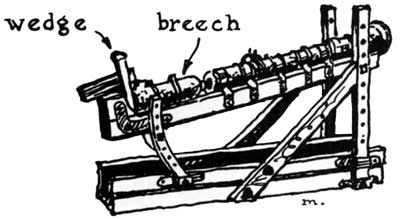
FIGURE 5—FIFTEENTH-CENTURY BREECHLOADER.
So, during 400 years, cannon had changed from the little vases, valuable chiefly for making noise, into the largest caliber weapons ever built, and then from the bombards into smaller, more powerful cannon. The gun of 1600 could throw a shot almost as far as the gun of 1850; not in fire power, but in mobility, organization, and tactics was artillery undeveloped. Because artillery lacked these things, the pike and musket were supreme on the battlefield.

|

|
|
|
Last Modified: Thurs, Sep 11 2003 10:00:00 pm PST |