

|
ARTILLERY THROUGH THE AGES A Short Illustrated History of Cannon, Emphasizing Types Used in America |
 |
THE ERA OF ARTILLERY (continued)
THE SEVENTEENTH CENTURY AND GUSTAVUS ADOLPHUS
Under the Swedish warrior Gustavus Adolphus, artillery began to take its true position on the field of battle. Gustavus saw the need for mobility, so he divorced anything heavier than a 12-pounder from his field artillery. His famous "leatheren" gun was so light that it could be drawn and served by two men. This gun was a wrought-copper tube screwed into a chambered brass breech, bound with four iron hoops. The copper tube was covered with layers of mastic, wrapped firmly with cords, then coated with an equalizing layer of plaster. A cover of leather, boiled and varnished, completed the gun. Naturally, the piece could withstand only a small charge, but it was highly mobile.
Gustavus abandoned the leather gun, however, in favor of a cast-iron 4-pounder and a 9-pounder demiculverin produced by his bright young artillery chief, Lennart Torstensson. The demiculverin was classed as the "feildpeece" par excellence, while the 4-pounder was so light (about 500 pounds) that two horses could pull it in the field.
These pieces could be served by three men. Combining the powder charge and projectile into a single cartridge did away with the old method of ladling the powder into the gun and increased the rapidity of fire. Whereas in the past one cannon for each thousand infantrymen had been standard, Gustavus brought the ratio up to six cannon, and attached a pair of light pieces to each regiment as "battalion guns." At the same time he knew the value of fire concentration, and he frequently massed guns in strong batteries. His plans called for smashing hostile infantry formations with artillery fire, while neutralizing the ponderous, immobile enemy guns with a whirlwind cavalry charge. The ideas were sound. Gustavus smashed the Spanish Squares at Breitenfeld in 1631.
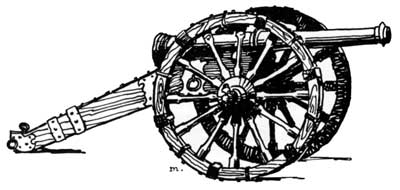
FIGURE 6—LIGHT ARTILLERY OF GUSTAVUS ADOLPHUS (1630).
Following the Swedish lead, all nations modified their artillery. Leadership fell alternately to the Germans, the French, and the Austrians. The mystery of artillery began to disappear, and gunners became professional soldiers. Bronze came to be the favorite gunmetal.
Louis XIV of France seems to have been the first to give permanent organization to the artillery. He raised a regiment of artillerymen in 1671 and established schools of instruction. The "standing army" principle that began about 1500 was by now in general use, and small armies of highly trained professional soldiers formed a class distinct from the rest of the population. As artillery became an organized arm of the military, expensive personnel and equipment had to be maintained even in peacetime. Still, some necessary changes were slow in coming. French artillery officers did not receive military rank until 1732, and in some countries drivers were still civilians in the 1790's. In 1716, Britain had organized artillery into two permanent companies, comprising the Royal Regiment of Artillery. Yet as late as the American Revolution there was a dispute about whether a general officer whose service had been in the Royal Artillery was entitled to command troops of all arms. There was no such question in England of the previous century: the artillery general was a personage having "alwayes a part of the charge, and when the chief generall is absent, he is to command all the army."
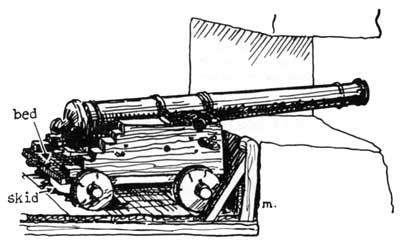
FIGURE 7—FRENCH GARRISON GUN (1650-1700). The
gun is on a sloping wooden platform at the embrasure. Note the heavy bed
on which the cheeks of the carriage rest and the built-in skid under the center
of the rear axletree.

|

|
|
|
Last Modified: Thurs, Sep 11 2003 10:00:00 pm PST |