|
|
|
NATURE NOTES FROM ACADIA
WILD FLOWERS OF EARLY MAY 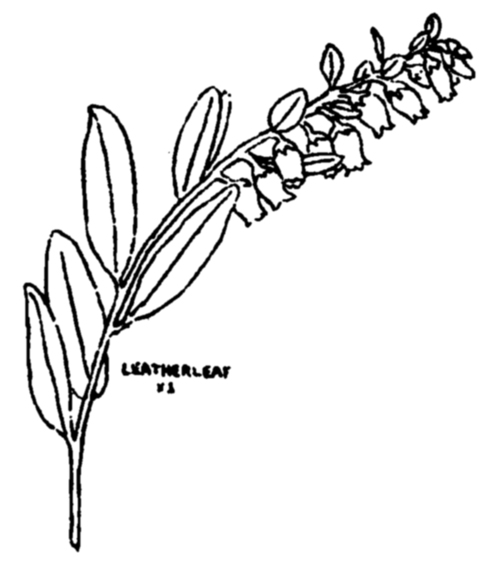
The month of May, especially early May, is catkin-time on Mount Desert Island. With willows, aspen, alders, cottonwood, beaked hazel, birches, hornbeam, and possibly other trees and shrubs flaunting their catkins in the breeze, this form of flower becomes dominant during the month. Other wildflowers may be more striking in appearance and more sweet in odor, but none can match such catkin-bearing plants as the hazels and alders, for instance, in their simple artistry. Their flowers are veritable harbingers of our northern spring - banners which a whole army of plebian plant-folk unfurl to welcome back the better season. Although the earliest buds of the Arbutus (Epigaea repens) will open here in April, early May is the height of its flowering season. On this island it can rightfully be regarded as one of the very earliest blooms, although in several of the New England states it is preceded by the Hepatica, Bloodroot, Spring Beauty and other flowers which are not known to occur on Mt. Desert Island. In Ohio I have found it in late March when the spring was abnormally late. The Trailing Arbutus is a plant of shadowy retreats where it creeps close to the earth. Often its exquisitely fragrant, pink-tinged, waxy white blossoms lie hidden beneath dry fallen leaves on wooded hillslopes. The leaves remain green throughout the winter and often appear brown and bedraggled during the plant's period of bloom. New leaves develop after the flowers disappear. At one time this lovely plant, supposedly named Mayflower by the Pilgrims, was to be found growing over a considerable area in the northeastern states, but vandals and greedy street venders have exterminated it in many localities. 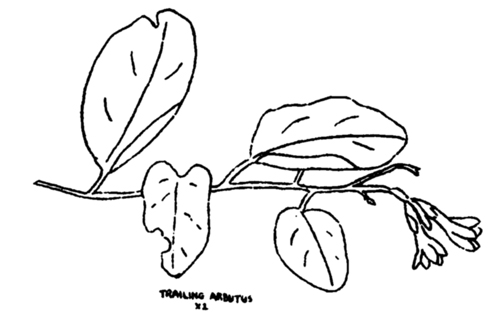
Violets, especially the dwarf Northern White Violet (Viola pallens) and certain of the blue forms, follow close upon the heels of the Arbutus. Bluets (Houstonia coerulea) are often to be seen growing with the violets, and both flowers are known to have an extensive period of bloom. In mid May, when the fallen blossoms of the common Red Maple (Acer rubrum) line the curbstones of the island towns, the lovely Shadbush or Service Berry (Amelanchier sp.) comes into bloom. Its delicate five-rayed white flowers appear when the leaves are about one-third grown. Later in the year its sweet purplish fruits will be welcomed by birds, by man, and by other animals. 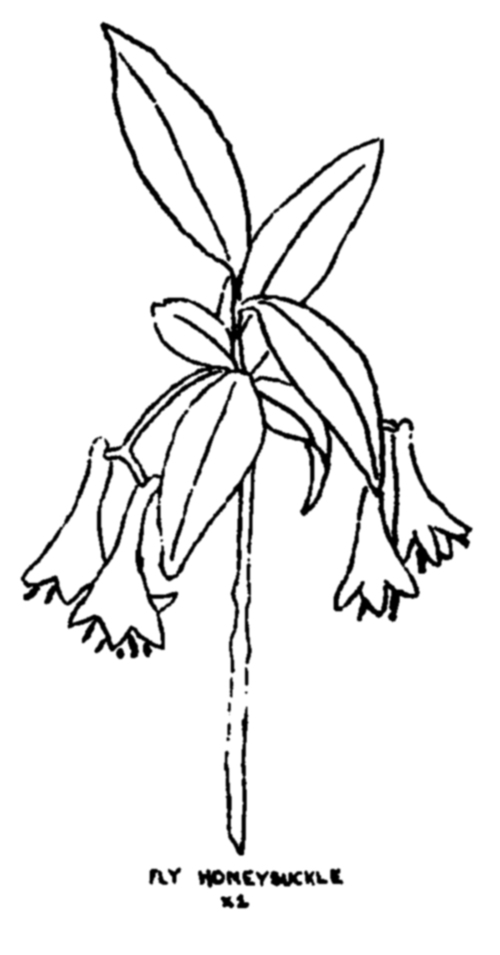
In marshy lowlands the Leather Leaf (Chamaedaphne calyculata) and the Goldthread (Coptis trifolia) are in flower. The former is a close-growing evergreen shrub two to four feet in height, often covering extensive areas and now bearing its attractive rows of tiny white bells on the undersides of the younger twigs. The Goldthread is a delicate dwarf whose five to seven white petal-like sepals are borne on stems three to five inches high. Its glossy three-parted evergreen leaves and bright orange-yellow roots are characteristic. A tea, valued as a spring tonic, is said to have been made from the bitter roots. The earliest of its kind to blossom is the so-called Fly Honeysuckle (Lonicera canadensis). The paired flowers, borne in tho leaf angles, are yellow in color, funnelshaped, and about three-fourths of an inch in length. Its ovate leaves are an attractive fresh green in color. The plant inhabits roadsides and open woods. The Blue or Mountain Fly Honeysuckle (L. coerulea) comes into blossom later in the month. Its flowers are somewhat shorter than those of L. canadensis while later in the season it is readily identified by its blue fruit. 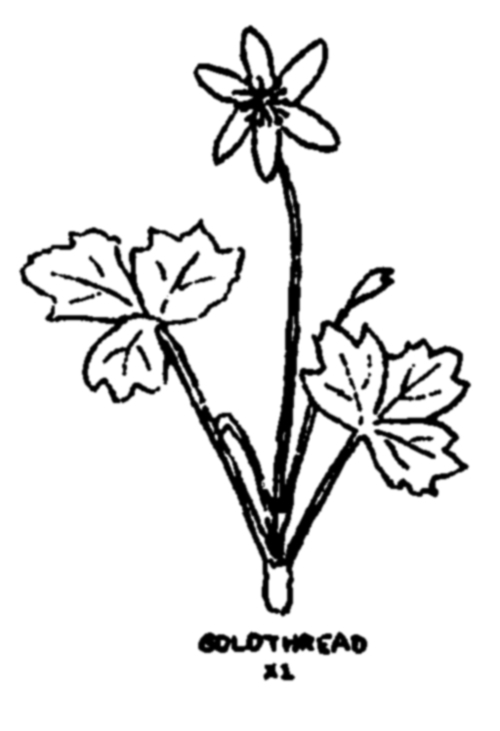
The Hobblebush or Wayfaring Tree (Viburnum alnifolium) displays its flat artistically-arranged flower clusters in mid-May. The marginal flowers, without stamens or pistils, are white and exceedingly showy. From spring to autumn this shrub is one of the most attractive plants of our woodlands. The American Yew (Taxus canadensis) with its small staminate flowers on the underside of its evergreen needles, the abundant Wild Strawberry (Fragaria sp.), the Fetid Currant (Ribes glandulosum), and perhaps a few others could be included in this list of the early May blooms. - Ranger-Naturalist "He who knows the most; he who knows what sweets and virtues are in the ground, the waters, the plants, the heavens, and how to come of these enchantments, is the rich and royal man." R. W. Emerson |
| <<< Previous | > Cover < | Next >>> |
nature_notes/acad/vol2-1e.htm
10-Sep-2008