|
Golden Spike
Cultural Landscape Report |

|
CHAPTER 4:
ANALYSIS AND EVALUATION (continued)
Views and Vistas
As stated above, views into and out of the NHS are important in terms of the manner in which they affect the setting of the site. During the primary period of significance (1869 to early 1870), the views from within the NHS to outlying lands would have been practically devoid of cultural modifications or improvements. This is especially true of Promontory Summit, which is indicated in historical accounts of the Last Spike ceremony as being extremely remote and offering few amenities, with the exception of the hastily constructed tents erected by private citizens. The same could be said of the views from the east and west slopes. With the exception of the construction camps located close to the grade, the lands beyond the railroad right-of-way would have held few manmade improvements.
During the later periods of significance, i.e., during the operational period of the railroad, the character of the surrounding lands changed. At the summit, a of number buildings constructed by the railroad and by local settlers clustered in the vicinity of Promontory Station, and ranch headquarters complexes were sparsely scattered across the viewshed of the NHS . Livestock grazed the hill slopes surrounding the railroad. Later still, the homestead shacks of dry-land farmers dotted the landscape, and former stands of native vegetation were cleared, plowed, and planted with agricultural crops.
Summary
Today, the views into and out of the NHS approximate the later historical period (1869-1904), after construction but before the intensive development of the dry farm era. On the west and east slopes, the views from the NHS incorporate an agricultural landscape consisting of cultivated fields in the level drainage bottoms and livestock grazing on the hill slopes. On either end of the NHS far distant views of the surrounding valleys and of the Great Salt Lake remain relatively unchanged. One exception to this rule is at the east end of the site, where the Thiokol / Autoliv plant represents a modern intrusion to the historical character of the views from the NHS.
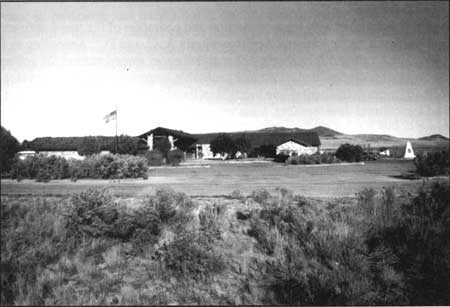
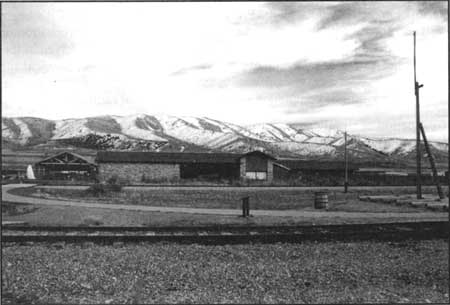
At the summit, views into the Last Spike Site have been altered. All of the improvements associated with the later historical periods have been removed or moved to new locations. However, these historic buildings have been replaced with the modern visitor center complex so that the early historic scene — one devoid of improvements — has been lost (Figures 50 and 51).
|
| Figure 50. View to north—contemporary scene at Last Spike Visitor Center. Source: HRA 2000. |
|
| Figure 51. View to southwest—from Last Spike Visitor Center. Source: HRA 2000. |
| <<< Previous | <<< Contents >>> | Next >>> |
http://www.nps.gov/gosp/clr/clr4j.htm
Last Updated: 27-Jul-2003