|
|
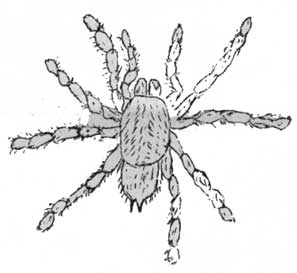
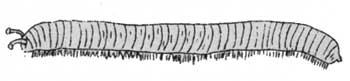
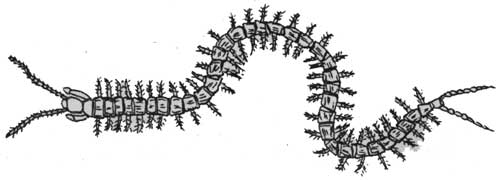
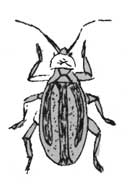
A collection of insects found on the Mesa Verde was begun a few years ago and has since been growing very much on its own momentum. The striving entomologist as he made his collection, mounted the specimens carefully in boxes with tight fitting lids, neatly aligned on pins, with date and place labels attached. In this way, they were displayed to such advantage, that all who looked at them realized that there was much of beauty and fascination in these crawling and flying creatures. The butterflies, moths and beetles, of which there are many here, were particularly spectacular. Rangers, roadworkers, housewives, Navajo Indians, and all volunteered as collectors. Every one became bug conscious. But the manner in which these collectors worked soon demanded a number of killing bottles be distributed. Would be specimens were being brought in in all stages of preservation; pressed between papers, in old envelopes, match boxes, tobacco cans, vest pockets, and even one Indian came to the office literally leading a large rhinoceros beetle by a string; he had lassoed the beast and was dragging it in by main force. The entomoligist's work was further complicated, however, because he had neglected to give a short entomological lecture to his co-workers. The contents of the various killing bettles was a revelation. Everything that could crawl or fly was considered a member of the class Insecta, and this collection must be all inclusive. Often a most jubilent individual would present a new insect, very unusual, only to be told it was not an insect at all. Scorpions, Spiders, centipedes, butterflies, young snakes, and lizards, all looked alike and were presented as insects. After a brief explanation as to the requirements of a perfect insect, the specimens brought in were more selected. But the Navajos considering these requirements entirely too technical to be taken seriously, resorted to their love of the practical joke. Then some of the strangest creatures imaginable found their way to the office. Centipedes, with the wings of a dragon fly attached by means of pinon gum; a large hairy caterpillar with butterfly wings; spiders with two legs removed; scorpions with all the colors of the rainbow cleverly painted on them. The creative ability of these Navajos is marvelous, and sometimes it would take careful scrutiny to see that their find was only a faked insect. But the clues to the situation could always be found by discovering the Navajo inventor at a safe distance doubled up with laughter at you apparent concern over this new bug. The experiences of this entomologist show that few people understand the distinctions made among these flying and crawling creatures, commonly called bugs and worms. Most of them we find belong to the phylum of animals called ARTHROPODA,— those having no backbone, but instead having a hard chitinous exoskeleton. The body is composed of definite segments, legs are paired and jointed. This group of animals is of great importance to the human race; some varieties are beneficial others harmful. Over 400,000 species are known and it is estimated that a like number are roaming the earth still undetermined. ANTHROPODA are divided into classes, five of which are found within the Mesa Verde area: Crustacea; Arachnida; Diplopoda; Chilopoda; Hexopoda or Insecta. A simple outline is given here which may be helpful to all embryo entomologists of this region. CLASS OF ARTHROPODA. 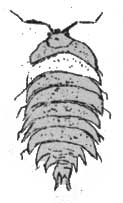 1. CRUSTACEA: Examples: 2. ARICHNIDA: Examples:
3. DIPLOPODA: Examples:
4. CHILOPODA: Examples:
5. HEXAPODA or INSECTA: 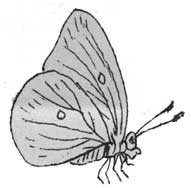
Examples: -oOo- | ||||||
| <<< Previous | > Cover < | Next >>> |
vol2-2f.htm
14-Oct-2011